
Pediatric Dentistry
Every child deserves a healthy smile, and the habits and experiences formed in early childhood have a lasting impact on oral health throughout life. Our practice is proud to provide gentle, attentive dental care for children of all ages — from their very first visit to their teen years and beyond.
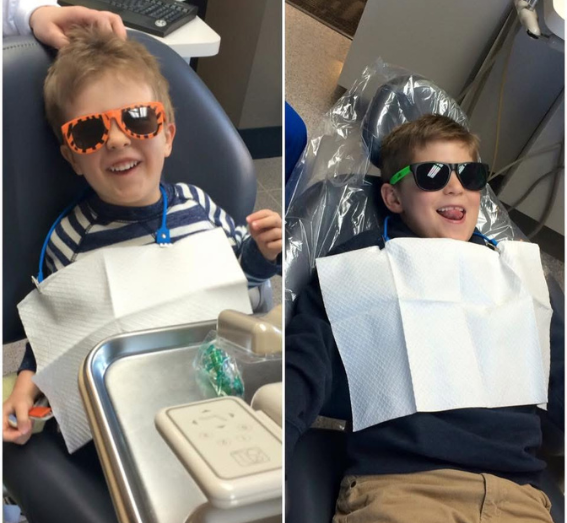
We understand that a trip to the dentist can feel intimidating for young patients, which is why we work hard to create a welcoming, low-pressure environment where kids feel comfortable and at ease. Our team is experienced in working with children, and we take the time to explain what we’re doing in ways that are simple and reassuring. Our goal is not just to treat young teeth — it’s to help children build a positive relationship with dental care that will serve them for the rest of their lives.
When Should My Child First Visit the Dentist?
The American Dental Association recommends that children have their first dental visit within six months of their first tooth appearing, or by their first birthday — whichever comes first. These early visits are less about treatment and more about getting your child comfortable with the dental environment, allowing us to monitor early tooth development, and giving parents guidance on how to care for their child’s teeth at home.
Early visits also allow us to identify any potential concerns — like early signs of decay or developmental issues — before they have a chance to become bigger problems. Starting early sets the stage for a lifetime of healthy smiles.
Pulpotomy
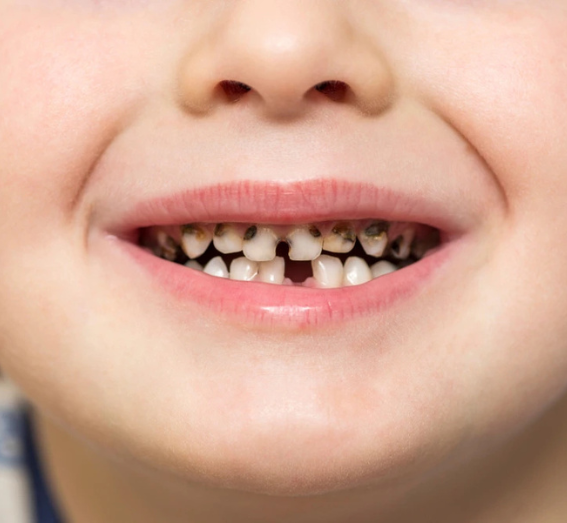
A pulpotomy is a procedure performed on a baby tooth when decay has reached the inner portion of the tooth — the pulp — but has not yet spread to the root. Think of it as a partial root canal for a primary tooth. During the procedure, the affected pulp tissue in the crown of the tooth is removed, and the remaining root pulp is treated and sealed to allow the tooth to remain healthy and functional.
Baby teeth play an important role in a child’s development. They hold space for permanent teeth, help with chewing and speech, and contribute to a child’s confidence and appearance. When possible, we prefer to save primary teeth rather than extract them, and a pulpotomy is often an effective way to do that. The procedure is performed with local anesthesia to ensure your child’s comfort, and it’s typically completed in a single visit.
Pediatric Crowns
When a child’s tooth is too damaged or decayed to be restored with a filling alone, a pediatric crown may be recommended. Crowns for primary teeth are designed to fully cover and protect the tooth, restoring its function and preventing further damage or infection.
Stainless steel crowns are the most commonly used option for baby teeth. They are durable, cost-effective, and can be placed in a single appointment. For front teeth where appearance is more of a consideration, tooth-colored options may be available. We’ll discuss which option is most appropriate for your child’s situation during the appointment.
Pediatric crowns are a common and reliable way to protect a damaged primary tooth until it naturally falls out on its own schedule.
Space Maintainers
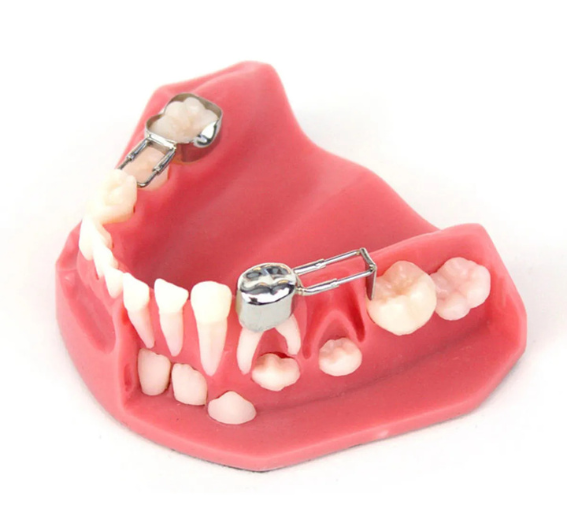
When a baby tooth is lost earlier than expected — whether due to decay, injury, or extraction — a space maintainer may be recommended to preserve the gap until the permanent tooth is ready to come in. Without a space maintainer, surrounding teeth can drift into the empty space over time, causing alignment problems that may require orthodontic treatment later.
Space maintainers are custom-made appliances that are designed to hold the space open while your child’s permanent tooth develops. They can be fixed (cemented in place) or removable, depending on your child’s age and specific situation. They are generally well-tolerated, require no special care beyond normal brushing, and are removed once the permanent tooth begins to emerge.
Caring for Your Child's Smile at Home
Professional dental care is only part of the picture. What happens at home between appointments matters just as much. We work with parents to establish good habits early — including proper brushing techniques, guidance on diet and snacking, and advice on habits like thumb sucking or pacifier use that can affect tooth and jaw development.
We also encourage parents to model good oral hygiene habits for their children. When kids see the adults in their lives taking care of their teeth, they’re more likely to see it as a normal and important part of their daily routine.
If you have questions about your child’s dental development or are ready to schedule their first visit, please don’t hesitate to reach out. We’d love to welcome your family to our practice.