
Nightguards
Teeth grinding — clinically known as bruxism — is a remarkably common condition, and many people who do it don’t even know. Because it most often happens during sleep, it frequently goes undetected until the damage has already begun to add up. Signs of bruxism include worn, flattened, or chipped teeth; jaw pain or soreness in the morning; frequent headaches; and tooth sensitivity that doesn’t have an obvious cause.
Left unaddressed, chronic grinding and clenching can cause significant, cumulative damage to the teeth and strain the jaw joints and surrounding muscles. A custom nightguard is one of the most effective ways to protect your teeth and alleviate these symptoms before the damage becomes more serious.
What Is a Nightguard?
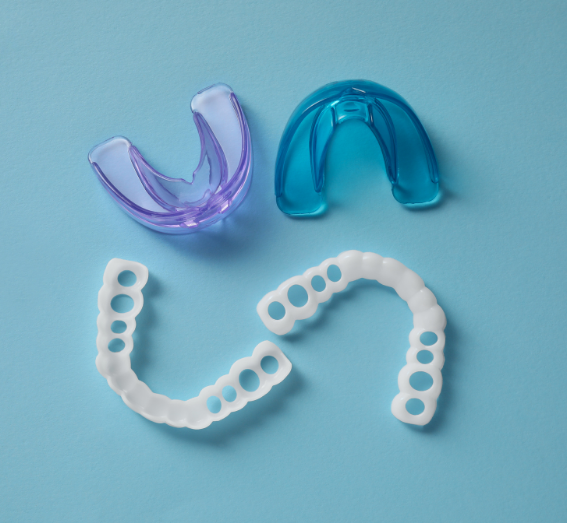
A nightguard is a custom-fitted oral appliance worn over the upper or lower teeth during sleep. It creates a protective barrier between the upper and lower teeth so that the forces of grinding and clenching are absorbed by the appliance rather than by your tooth enamel.
Custom nightguards are designed from impressions of your specific teeth, which means they fit precisely and comfortably in your mouth. This is a significant difference from the one-size-fits-all boil-and-bite options available at pharmacies — those tend to be bulky, uncomfortable, and less effective over time because they don’t fit the contours of your mouth the way a custom appliance does.
Getting a custom nightguard from our office is a straightforward process. We take impressions of your teeth, which are sent to the lab, and the finished appliance is fitted and adjusted at a follow-up appointment. With proper care, a quality nightguard can last for many years.
Do I Need a Nightguard?
If you wake up with jaw soreness, headaches, or tooth sensitivity, or if your dentist has noticed signs of wear on your teeth during an examination, a nightguard may be an important investment in your long-term oral health. Even if you’re not sure whether you grind your teeth, we can evaluate the condition of your teeth and jaw during a routine visit and let you know if we see any signs of bruxism.
Protecting your teeth from grinding is far less costly and invasive than repairing the damage after it’s occurred. If you’d like to learn more or schedule an appointment, please give our office a call.