
Endodontics
Endodontics is the branch of dentistry focused on the interior of the tooth — specifically the soft tissue inside the root canals, known as the pulp. When this tissue becomes infected or inflamed due to deep decay, a cracked tooth, or repeated dental procedures, endodontic treatment is often the most effective way to save the tooth and relieve the pain associated with the infection.
Despite its reputation, root canal therapy is far more comfortable than most people expect — and in most cases, it’s no more involved than getting a filling. The goal of endodontic treatment is to eliminate infection, protect the tooth from future microbial invasion, and preserve the natural tooth for as long as possible.
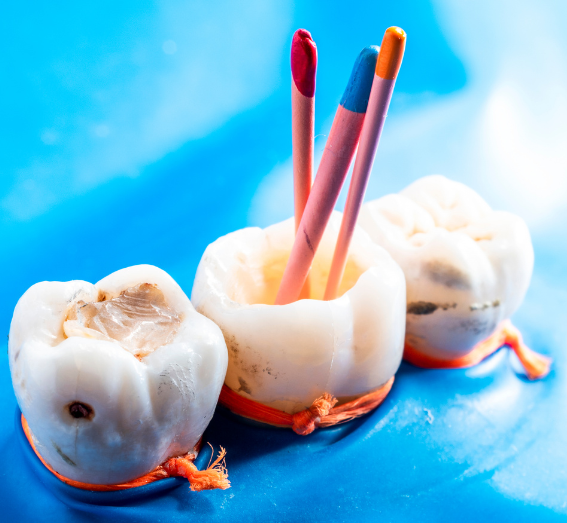
Root Canal Therapy
A root canal is needed when the pulp inside your tooth — the soft tissue containing nerves and blood vessels — becomes infected or irreversibly inflamed. This can happen as a result of deep decay, a cracked or fractured tooth, or trauma to the tooth. Left untreated, an infected tooth can cause severe pain, spread infection to surrounding teeth and bone, and ultimately lead to tooth loss.
During root canal therapy, we begin by numbing the area with local anesthesia to ensure your comfort throughout the procedure. We then create a small opening in the top of the tooth to access the pulp chamber and root canals. The infected or damaged pulp is carefully removed, the canals are cleaned and shaped, and the space is filled with a biocompatible material called gutta-percha. The tooth is then sealed.
In most cases, a tooth that has had a root canal will need to be restored with a crown to protect it and restore full chewing function. We handle both the root canal and the crown restoration at our practice, so you won’t need to be referred elsewhere.
Apicoectomy
An apicoectomy is a minor surgical procedure performed when a root canal or retreatment has not been able to fully resolve infection at the tip of the root. During the procedure, we make a small incision in the gum tissue to expose the root, remove the tip of the root along with any surrounding infected tissue, and seal the end of the root with a small filling.
The area is then sutured closed and heals over the following weeks. An apicoectomy is typically performed under local anesthesia and is considered a routine procedure with a high success rate. For many patients, it is the final step in saving a tooth that would otherwise need to be extracted.
Saving Your Natural Teeth
Whenever possible, preserving your natural teeth is our priority. Nothing works quite like the real thing — not implants, not bridges, not dentures. If you’re experiencing tooth pain, sensitivity to heat or cold that lingers, swelling around a tooth, or darkening of a tooth, these may be signs that endodontic treatment is needed. Contact our office so we can evaluate the situation and help you understand your options.